


Norwegian Armchair Travel: Norway's Landscape & Wool Heritage

Norwegian wool begins with climate. This is a country defined by weather and light: winters linger, winds sweep in off the sea, and entire regions tip into Arctic darkness before bursting into endless summer days.
The country itself runs more than 1,100 miles from south to north, reaching well into the Arctic Circle. Mountains dominate along its length, leaving only a narrow fraction of land fit for crops.
Sheep thrive where fields cannot. Their fleece became the foundation for garments engineered for endurance. In this environment, wool was not a luxury fiber, it was a practical necessity. Over generations, that practical need evolved into a wool tradition known for structure, resilience, and striking pattern work.
A Land Shaped by Ice and Sea

Norway is a country of stark contrasts. The west coast catches the full force of Atlantic weather systems, rain-soaked, wind-swept, and mild enough to keep grass green year-round. Inland, temperatures swing dramatically between seasons. In the north, the sun doesn't set for weeks in summer and barely rises in winter. The mountains that divide east from west create their own microclimates, sheltering broad valleys around Oslo in the east while the fjord country of the west experiences almost oceanic conditions.
 For sheep, this diversity meant adaptation or extinction. The breeds that survived developed fleeces of remarkable complexity, water-resistant outer coats protecting warm, insulating inner fibers. These weren't coddled animals. They were hardy survivors whose wool reflected every challenge their landscape threw at them.
That fiber memory of difficult terrain and changeable weather, is what knitters around the world are holding in their hands when they work with Norwegian yarn.
Where We're Headed: The Knitting Regions
Norway's landscape created distinct regional knitting traditions, each shaped by local conditions, local sheep, and local ingenuity. Here's a brief geography of the wool country we'll be exploring:
Western Norway: Fjord Country
The west coast is Norway's most dramatic landscape, those iconic fjords cutting deep inland from the sea, flanked by mountains that plunge straight into the water. This is also the heartland of Norwegian yarn production.

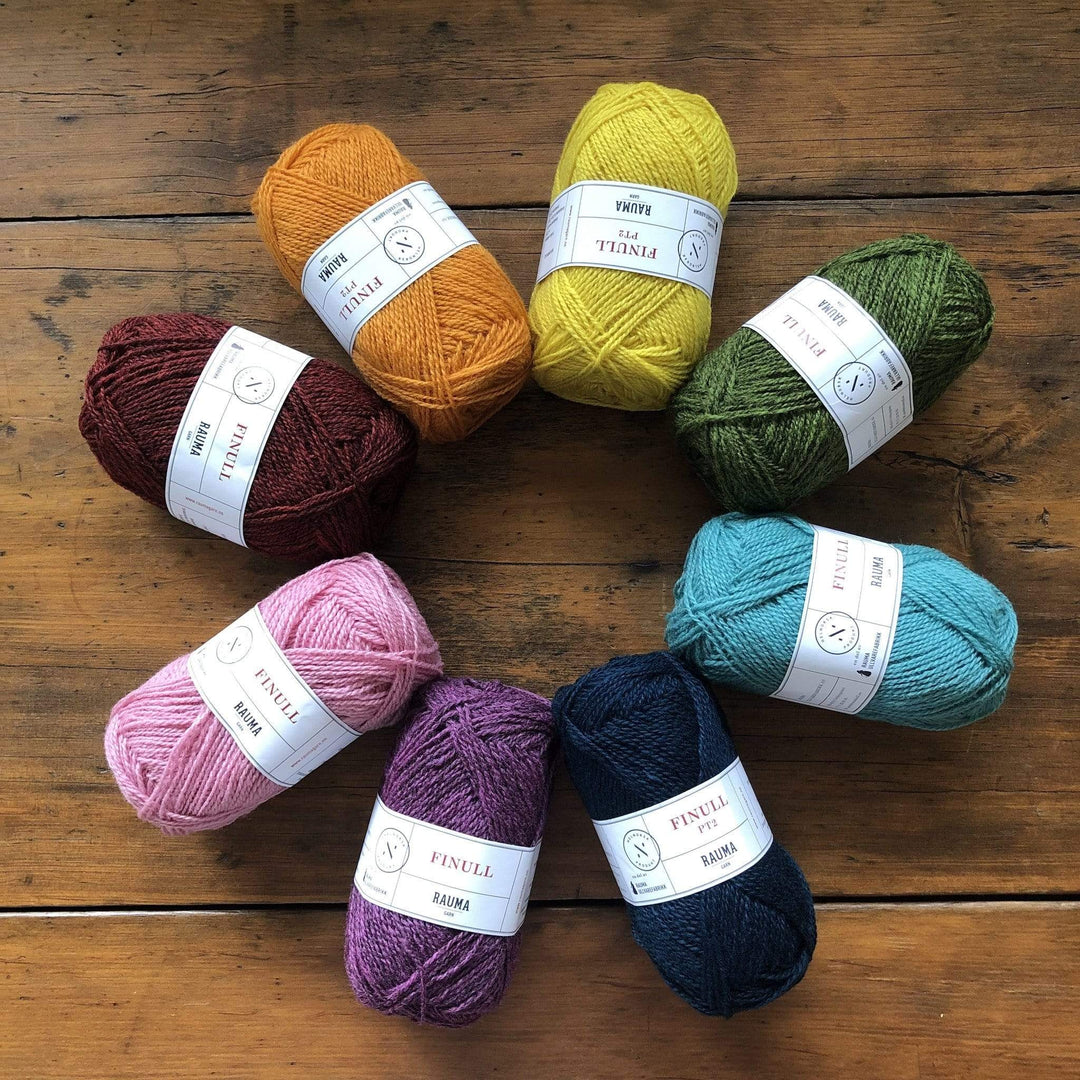
Rauma sits in Veblungsnes, in the Møre og Romsdalen region, right on the Rauma River on the west coast. This river, considered one of the most beautiful in Norway, now provides hydroelectric power to the region, including the spinning mill itself. In 1927, a 25-year-old named Erling Digernes took over a small woolen mill here with just three employees. That mill is now in its third generation of the Digernes family, producing hundreds of thousands of skeins of yarn annually, all based on Norwegian wool, all processed from fleece to finished yarn in the same valley where the company began.
 |
 |
|
The Rauma Mill In Norway’s west, Rauma sits among mountains, rivers, and long-standing wool traditions. |
The Hillesvåg Mill On Norway’s western coast, Hillesvåg has been spinning yarn in a small village by the sea since 1898. |
Further south along the western coast, just 35 kilometers north of Bergen, the Hillesvåg mill sits on the shores of the Osterfjord, on the edge of the Bergen archipelago. Founded in 1898, it's now in its fourth generation of family ownership, and it's a working museum as much as a working mill. Some of the machines still in use today date from around the year 1900, and with proper care and skilled hands, they still produce yarn just as beautifully today as they did back then.
Bergen itself, just down the coast from Hillesvåg, is Norway's second largest city and has long been a center of textile tradition. Today it's home to the Norwegian Knitting Industry Museum, a remarkable institution dedicated to preserving and celebrating Norway's knitting heritage.

Southwest Norway: The Stavanger Region
Travel south from Bergen along the coast and you reach the Stavanger region, a landscape of lower, more rolling terrain compared to the dramatic fjords further north. This is where Sandnes Garn was founded in 1888 as Sandnes Uldvarefabrik, with a red brick building in the very heart of Sandnes. The factory bore witness to the industrial revolution before it burned down in 1978 and was rebuilt in a valley outside of town. Today, Sandnes Garn is the largest producer of hand-knitting yarn in Northern Europe, with no less than 15 million balls of yarn leaving the premises every year.

Central Norway: Selbu and Trøndelag
Inland from Trondheim, in the heart of Norway's Trøndelag region, lies Selbu, a small municipality that punches far above its weight in knitting history. In 1857, Marit Emstad wore her handknitted two-color mittens to church in Selbu. The design caused an immediate sensation, spreading from neighbor to neighbor, farm to farm, and eventually became one of the most recognized motifs in Norwegian craft history. Today there are over 300 registered mitten patterns attributed to Selbu.
The Selbu star even appears in the municipality's official coat of arms, testament to how deeply knitting patterns can become woven into regional identity.
 |
 |
|
Selbu Mittens Cast on a pair of classic Selbu mittens in Rauma Strikkegarn and take part in a tradition that began with Marit. |
Authentic Norwegian Pewter Buttons Finish your knits with authentic Norwegian pewter buttons, featuring the traditional Selbu star in classic detail. |
Southern Norway: Setesdal and Telemark

Tadeáš Bednarz, CC BY-SA 4.0, via Wikimedia Commons
The inland valleys of southern Norway, Setesdal, Telemark, and their neighboring regions, are home to some of Norway's most famous traditional sweater designs. These are the areas that gave us the bold black-and-white Setesdal lusekofte, with its characteristic "lice" stitches and pewter clasps, and the intricate patterns of Telemark that have influenced colorwork knitters for generations.
These inland communities developed strong knitting identities partly because of their relative isolation. Separated from coastal trade routes by mountains, they developed their own visual languages in wool that became deeply tied to local identity and eventually to Norway's national folk costume tradition, the bunad.

Northern Norway and the Lofoten Islands
Far to the north, above the Arctic Circle, the Lofoten Islands rise dramatically from the Norwegian Sea, jagged mountain peaks dropping straight into the water, fishing villages clinging to the shoreline. This region has some of the oldest types of sheep in Scandinavia, with Old Norse Sheep DNA still similar to the sheep of the Viking era.
The extreme conditions of northern Norway created a particular appreciation for wool's practical qualities. Here, a warm sweater or pair of mittens wasn't a fashion choice, it was a matter of survival through the long, dark winter months.

Friluftsliv: The Outdoor Life That Made Norwegian Knitting Essential
To truly understand Norwegian knitting, you need to understand friluftsliv, the Norwegian concept of outdoor life that is almost a national cornerstone. Half the nation's families have access to nearby ski huts, cabins, or boats, and virtually everyone engages in outdoor pursuits such as skiing, hiking, and boating.
According to Life in Norway, citing a SIFO survey, 43% of all women in Norway knit. The tradition is so strong that phrases like strikk og drikk ("knit and drink") reflect the deeply social nature of the craft.
This is a culture where handknitting never fell out of fashion because it never stopped being useful. A hand-knit sweater for the mountains. Mittens for skiing. Thick socks for hiking boots. The demands of Norwegian outdoor life kept knitting relevant through every era of fashion and industrialization.
The Bunad: When Wool Becomes Identity

Wolfmann, CC BY-SA 4.0, via Wikimedia Commons
No exploration of Norwegian textile culture is complete without the bunad, Norway's national folk costume. There are over 200 variations, each with its own colors, embroidery patterns, and accessories that tell you which region of Norway it comes from. These beautiful garments are made to last and be passed on for generations.

National Library of Norway, Public domain, via Wikimedia Commons
Wool is at the heart of the bunad. The main garment, a tailored bodice and skirt, is typically made from wool fabric, often in rich regional colors. Wool stockings are a traditional component, usually knee-high in white or a regionally specific color, and in some areas they feature knitted colorwork patterns reflecting the same geometric traditions seen in Norwegian sweaters and mittens. In some regions, men even wear a knitted sweater as part of their bunad, most notably the black-and-white Setesdal lusekofte style.
The bunad is a direct expression of the same spirit that created Norwegian knitting's regional diversity, the deep Norwegian connection to place, to community, and to the idea that what you wear says something meaningful about where you come from.
For knitters, this connection between textile and identity is immediately recognizable. It's the same spirit that leads us to choose a specific yarn for a specific project, to seek out the authentic source, to want to understand the story behind the fiber in our hands.
 |
 |
| A Vestfold bunad Wolfmann, CC BY-SA 4.0, via Wikimedia Commons |
A knitted cardigan inspired by the Vestfold bunad's regional embroidery patterns Wolfmann, CC BY-SA 4.0, via Wikimedia Commons |
What This Means for Your Knitting

Every skein of Rauma, Sandnesgarn, or Hillesvåg yarn carries this landscape within it. The west coast fjords in Rauma's location shaped the wool traditions their mill grew up serving. The Bergen archipelago's farming islands supply fleece to Hillesvåg's looms. Sandnesgarn's southwestern setting connects it to centuries of regional wool tradition.
When you cast on a Norwegian project, you're not just following a pattern. You're entering a conversation that stretches back through centuries of people making practical, beautiful things from the wool their landscape provided.
Next stop: we're meeting the sheep themselves!
58 comments
Back to The Woolly Thistle




I love this thought; “That fiber memory of difficult terrain and changeable weather, is what knitters around the world are holding in their hands when they work with Norwegian yarn”
I’m enjoying these emails so much. This is a culture I was familiar with as a child. And am enjoying seeing and learning it again. Thank you!
Very beautiful and harsh country. People must be very sociable to each other especially in long dark days. Diet if mostly fish I’m guessing, not much fruit and veggies.
Very informative, enjoyable. Thank you for the opportunity to learn about Norway💕
Thank you for such good information about the wool producing areas of Norway that are heavily influenced by the landscapes.
Leave a comment