


Armchair Travels: Spain & Portugal - Meet the Sheep!
Every yarn has a sheep behind it, and on the Iberian Peninsula there are more sheep behind more yarns than most knitters realize. Spain has dozens of native breeds. Portugal has fifteen. Some of them have shaped global wool history. Others are rare enough that the entire population could fit on a single hillside. All of them have something to tell us about why Iberian yarn behaves the way it does.
Let's start with the most famous sheep in the world.
Merino: The Fleece That Rewrote Wool History

If you've knit with commercial Merino, you've knit something whose ancestors walked Spanish drovers' roads. The breed originated on the Iberian Peninsula in the early medieval period, almost certainly from sheep brought across from North Africa by Berber traders and crossed with the hardy local flocks already grazing the Meseta. Older sources often credit Phoenician or Roman traders, and they may well have played a part in earlier centuries, but the consensus today points to a medieval North African origin.
What emerged was a sheep with extraordinarily fine, soft, climate-regulating wool, capable of producing fleece so consistent and so prized that it would become Europe's most valuable textile fiber for the better part of five hundred years.

Spain knew exactly what it had. From the late medieval period through the eighteenth century, the export of live Merino sheep was forbidden under Spanish law, and at certain points the penalty for smuggling one out of the country was death. This was not an idle threat, for Merino fleeces underwrote the Spanish economy. The Mesta, the great drovers' guild we met at our last stop, existed in large part to organize and protect the Merino flocks as they walked their seasonal routes across the country.

The ban held for centuries. Then, in 1786, it cracked open the way state secrets often do, through family. Louis XVI of France wrote to his cousin, King Charles III of Spain, asking if he might purchase a flock of Merino for a royal experimental farm he was building at Rambouillet, southwest of Paris. Charles agreed, and a flock of Spanish Merinos, 366 strong, walked north out of Spain under the care of Spanish shepherds. They became the founding flock of what is now the Rambouillet breed, the French Merino that would later seed much of the American fine-wool industry. The bigger blow came shortly after, when the Napoleonic Wars sent invading armies through Spain and many of the country's finest flocks were carried off as spoils. By the early nineteenth century, Merino had reached Saxony, Britain, and the great wool-producing colonies: Australia, New Zealand, South Africa, Argentina, the western United States. Today, the vast majority of fine wool grown anywhere in the world traces its ancestry back to those original Iberian flocks.

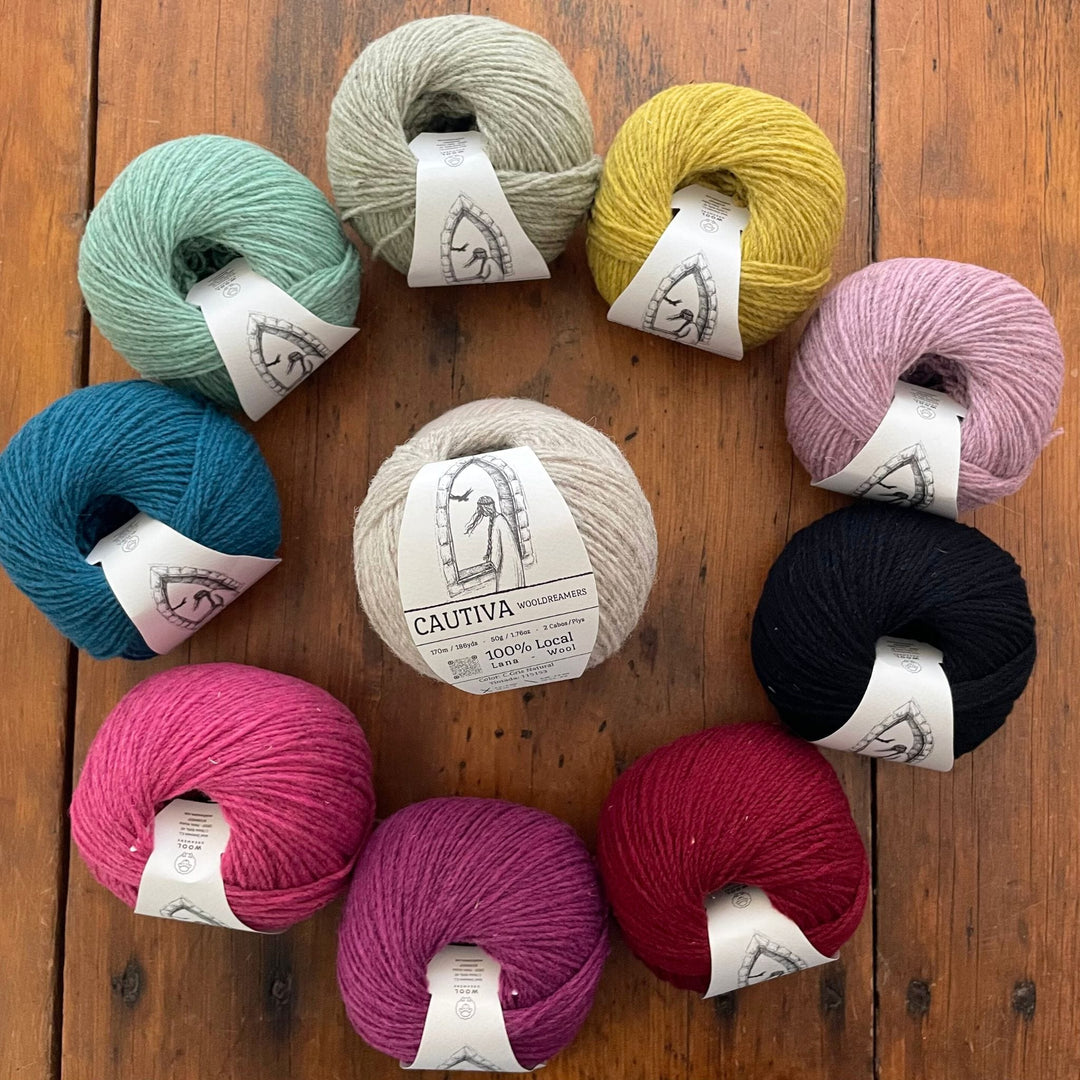
Despite being scattered across the globe, Merino never left home. The breed is still raised in Spain and Portugal today, in flocks that have been there continuously since the Middle Ages. Spanish Merino comes in a few grades, and the one you're most likely to meet in your knitting is Merino Entrefina, a medium-grade Spanish Merino that anchors several WoolDreamers yarns, including Mota and Saona. It has more character, more structure, and a slight dryness that comes from the Iberian climate itself, the legacy of sheep raised on dry pasture rather than wetter European grasslands. Portugal has its own native Merino strains, Merino Branco (white) and Merino Preto (black), both used in Retrosaria's yarns.
The famous fine Merino of the Australian wool industry is, in a sense, the Iberian story exported. The Merino still grazing in Castilla-La Mancha and the Alentejo is the original.

Shop Pure Spanish Merino Wool (opens in new tab)
Spain's Flocks

Beyond Merino, Spain has a long roster of native breeds, most of them shaped by the same hot, dry, walking-distance landscape that produced the Mesta. Three are worth meeting in particular.

Manchega is the breed behind WoolDreamers' Manchelopis, and it has one of the most unexpected origin stories of any sheep in the trade. The Manchega is the milk sheep of La Mancha, raised primarily for the famous Manchego cheese that bears the region's name. Its wool, for centuries, was treated as a byproduct: sheared off, baled up, and sold for almost nothing, or sometimes simply thrown away. WoolDreamers' entire founding idea was that this wool was worth something. The fleece is medium in fineness, soft enough to wear comfortably, with a structural honesty that works particularly well in unspun and woolen-spun yarns. Manchega sheep are typically white, but a small population of rare black Manchega still exists, and the dark brown fleeces in Manchelopis come from one of these flocks.

Xalda is the rare and storied breed of Asturias, the wet, green, mountainous region in the north of Spain. Asturias is a different Spain from the dry interior we've been walking through: Atlantic light, misty hills, and a deep Celtic-rooted identity that long predates the modern country. Xalda is one of the oldest sheep breeds in Spain, and possibly in Europe.

The Greek geographer Strabo, writing around the time of Augustus, described the Asturi tribe weaving black saga (the heavy woolen cloaks worn by Celtic and Roman warriors alike) from the wool of small, hardy local sheep, and the consensus among historians is that those sheep were the ancestors of today's Xalda. In the eighteenth century, an estimated six hundred thousand Xalda grazed in Asturias. By the time a breeders' association formed to save them, the population had fallen to about four hundred animals. They are still rare today, still grazing in Asturias, and still recognizable in old paintings of mountain shepherds. Their wool is rarely available in commercial yarn, but the breed itself is one of the great survival stories of Iberian sheep.
An artist's depiction of a sagum, the heavy woolen cloak worn in the ancient world.

Shop WoolDreamers Mota (opens in new tab)
Portugal's Flocks
Portugal's roughly fifteen native sheep breeds (Retrosaria works with most of them) range from the fine and dairy-adjacent to the rustic and rare. Several sit at the heart of the Retrosaria yarns most likely to land in your stash.

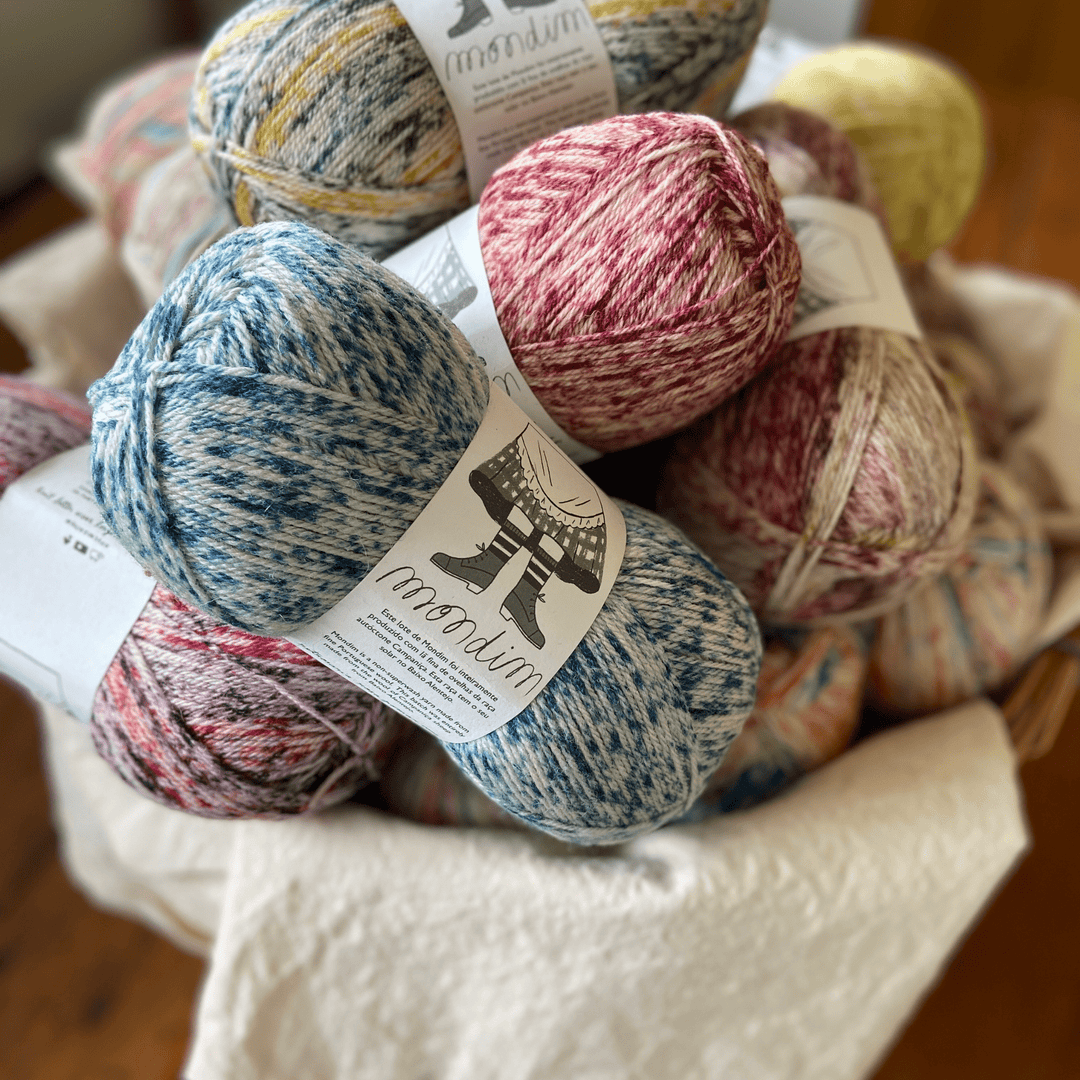
Campaniça is the breed behind Mondim and Vovó, the two Retrosaria yarns most knitters meet first. Campaniça sheep are native to the south of Portugal, particularly the Alentejo, and they are one of the country's older dairy and wool breeds. The wool is fine and soft, well suited to next-to-skin garments, and minimally processed in Retrosaria's hands. Vovó is named for grandmothers, and Campaniça is the wool that built generations of Portuguese sweaters and cardigans intended for daily wear.

Saloia is the breed behind Brusca, and it has a particularly local story. Saloia sheep are native to the region around Lisbon and Setúbal, where they have grazed since at least the nineteenth century, when their fleece was documented as some of the finest in the country. They are also dairy sheep, and the famous Azeitão cheese was traditionally made from their milk. Brusca blends Saloia with Portuguese Merino Branco and Merino Preto, which is why it carries both the fine softness of Merino and the slight character of a working local breed.

Bordaleira and Serra da Estrela are mountain breeds, native to the high range of central Portugal that gives the breed its name. Serra da Estrela is primarily a dairy sheep, famous for the eponymous Portuguese cheese, but its wool also turns up in some traditional Portuguese textiles, particularly the heavy hand-woven capote worn by shepherds. The breed is one of the oldest in the country, with shepherding traditions in the Serra da Estrela that have continued essentially unbroken for centuries.

Portuguese Black Merino (Merina Preta) is one of Portugal's three native Merino breeds, alongside Merino Branco and the inland Merina da Beira Baixa. The Black Merino is found primarily in the south of the country, particularly the Alentejo, where it shares the landscape with Campaniça sheep and the cork oaks of the broader montado ecosystem. The breed is widely believed to have been introduced to Portugal by the Beri-Merines, the Berber dynasty whose name some historians trace to the word "Merino" itself, lending the breed an origin story that reaches back to the same early-medieval Iberian and North African exchange we walked through at our Merino opening.

What distinguishes the Merina Preta is its texture. Where commercial Merino has been bred for centuries toward an ever-finer, smoother, more uniform fleece, the Portuguese Black Merino has stayed closer to its original form: soft and elastic still, but with a more rustic, more textured profile. The fleece often shows less of the tight, defined crimp of modern Merino, and the natural colors of the wool, ranging from rich chocolate brown to deep near-black, are some of the most striking on any working flock in Europe. The wool finds its way into Retrosaria's Brusca (where it joins Saloia and Merino Branco) and into Pegulhal, the fingering-weight colorwork yarn whose deep natural shades come directly from the Black Merino flocks. Both yarns work with sheep registered through ANCORME, the National Association of Merino Breeders, which traces every fleece back to its shepherd.

Churra Badana is one of nine native breeds in Portugal's Churra family, the rustic long-wool sheep traditionally raised across the country's interior. Among them, Churra Badana holds a particular place: it is the most critically endangered of all of Portugal's native sheep, classified as at serious risk of extinction. Found in the Bragança region of far northeastern Portugal, deep in the mountains of Trás-os-Montes, this red-faced breed produces a long, characterful fleece that was once woven into local blankets and rustic textiles. Through the second half of the twentieth century, as foreign breeds replaced native flocks across the country, demand for Churra Badana wool collapsed, and what had once been a regional resource became, for the few remaining shepherds, a burden that cost more to shear than it could be sold for. Rosa Pomar has made the survival of this breed one of Retrosaria's signature projects.
Beyond these breeds, Portugal's smaller and rarer breeds (Churra do Campo, Churra Algarvia, Churra Galega Mirandesa, and others) are the sheep behind Retrosaria's small-batch village yarns: Bucos, Mirandesa, Nordeste, Alfeire. These are hand-processed in tiny quantities, often by the shepherds and their neighbors themselves, and they carry the most direct line we have to traditional Portuguese wool craft.

Bring Home Some Wool from the Portuguese Saloia (opens in new tab)
Saving the Flocks
Many of these breeds came within a generation or two of disappearing. Xalda dropped to four hundred animals. Churra Badana, just as we saw, became so unprofitable to shear that the wool was considered a burden rather than a resource. The same story repeated across the peninsula, breed after breed, valley after valley.

What pulled these endangered breeds back from the brink was the determination of the people themselves. Shepherds who hesitated to switch breeds. Mill owners who kept their machines running. Breeders' associations formed by farmers who simply decided that letting these animals vanish would be worse than the work of saving them. And, more recently, yarn producers like WoolDreamers and Retrosaria, who created a market for wool that had become nearly worthless, paying shepherds fair prices and turning forgotten fleece into yarn that knitters around the world are choosing to put in their hands.

When you cast on with Manchelopis or Mondim, you are part of that revival. The yarn exists because the breed survived, and the breed survived because someone decided it was worth keeping. That's a satisfying thing to remember while you knit.
What's Next
At our fourth stop, we'll meet the producers themselves: WoolDreamers in Castilla-La Mancha and Retrosaria Rosa Pomar in Lisbon. Two very different philosophies, one peninsula, and the people working fleece by fleece to keep all of this going.
We'll see you there.
13 comments
Back to The Woolly Thistle





I am heading to Portugal in two weeks and will be looking for yarn 🧶. This is so timely ❤️
This is fantastic information, I truly hope the project to save the rare breeds and keep the sheep not considered profitable going continues.
I’d be curious to know what wool is used to knit the Portuguese thick cardigans we purchased in Capa d Roca. If anyone knows, I’d be ever so grateful to know.
This is so fabulous!!! Thank you for doing this.
I am so very much enjoying this series. Knowing the history of the yarn, the countries and the people and sheep that produce it helps me know why it’s important to support them.
Leave a comment