


Armchair Travels: Spain & Portugal - Meet the Makers
The Producers of Iberian Wool
Imagine for a moment that you've inherited a problem. The wool of your country's native sheep is being treated as a byproduct. Fleeces from breeds that have grazed these hills for centuries are being burned, baled cheaply, or sometimes simply abandoned. Shepherds are paid less for shearing than the cost of the work. The mills that once spun this wool are closing one by one.
This is the problem WoolDreamers in Spain and Retrosaria Rosa Pomar in Portugal each looked at, and each decided to solve.
They went about it differently. WoolDreamers brought the depth of a single family mill to the work, four generations of accumulated knowledge poured into rescuing Spanish wool one breed at a time. Retrosaria brought the breadth of a country's villages, working flock by flock and shepherd by shepherd to put Portuguese fleece back into yarn. Two approaches, one mission, and a peninsula that has more knitting wool on its shelves today because of both.
Let's meet them.
WoolDreamers ~ Castilla-La Mancha
There's a label on a skein of Mota that reads, in Spanish, No son gigantes, son molinos. They are not giants, they are mills. It is a Don Quixote reference, and the mills in question are the white windmills of La Mancha, which still turn on the ridgelines above the dry plateau where Cervantes set his most famous novel.

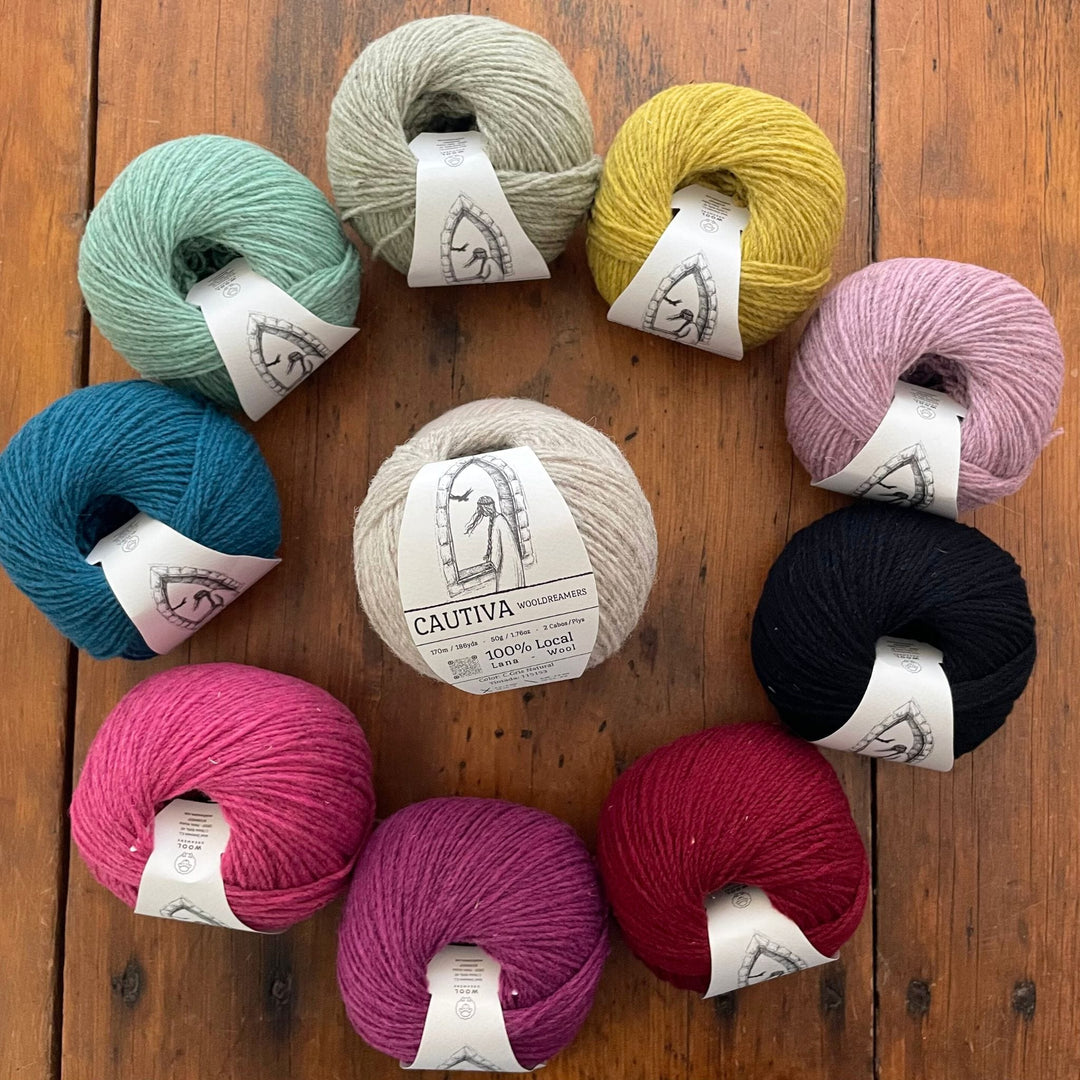
The company that put those windmills on the label is named WoolDreamers, and the mill where the yarn is spun sits in Mota del Cuervo, in the heart of that landscape. It has been there for the better part of a century, passed down through four generations of the Cabo family. WoolDreamers, the hand-knitting branch, was founded in 2020 by Ramón Cabo, who took the mill's century of expertise and pointed it at a new mission: putting the best of Spanish wool into the hands of knitters.

The mission begins with Manchega, the milk sheep of La Mancha. Its fleece had been treated as a byproduct of cheese production for so long that most shepherds were lucky to recover the cost of shearing. WoolDreamers offered them a fair price for that wool, sorted it carefully, and turned it into yarn that has become one of the most distinctive products in the modern hand-knitting world. The rich dark fleeces come from the rare black Manchega, a small population still grazing in central Spain.
 |
 A cone of yarn taking shape on the spinning frame at WoolDreamers. Each skein begins here, with Spanish fleece and four generations of technique working together. Photo by WoolDreamers. |
What the Cabo family brings to that mission is something the team themselves describe as the hardest part of the craft to keep alive: inherited knowledge. In a recent post, they wrote about the tools in their mill, some a hundred years old, machines no longer manufactured anywhere on earth, parts that fit only this one room in this one mill. But the most important tool, they said, isn't any of those. It's the hands of the people who came before. The master who fixed a particular machine forty years ago in a way only he understood. The woman who sorted fleece without ever needing a second look. When something breaks, the team wrote, they wrestle with the knowledge of those who are no longer here. Winning that fight is the real work.
That is what is in the yarn.
The Yarns

Manchelopis
WoolDreamers' headline yarn, Manchelopis is an unspun 100% Manchega wool. It behaves the way Icelandic Lopi behaves, but in a Spanish breed and a Spanish landscape, knitting into the airy, lofty fabric that lets a heritage fleece do what it does best. Available in natural cream from the white Manchega and in deep brown from the rare black flocks.
Shop Manchelopis (opens in new tab)

90 Varas
WoolDreamers' most recent collection, and the yarn we have been waiting to introduce since the first stop on this journey. A fingering-weight, 2-ply woolen-spun yarn made from 100% transhumant Spanish Merino, fleece from flocks that still walk the seasonal routes between mountain and lowland pastures. The wool is fleece-dyed before spinning, giving the finished yarn a heathered, melange depth that reads as the landscape it came from. The name honors the cañadas reales we walked at our second stop: ninety varas wide by royal decree, ancient drovers' roads still grazed today. UNESCO recognizes Spanish transhumance as Intangible Cultural Heritage, and every skein of 90 Varas supports the practice continuing.
Shop 90 Varas (opens in new tab)

Mota
The workhorse of the WoolDreamers lineup, Mota is a 3-ply DK blending Merino Entrefina and Manchega from Spanish flocks. Soft enough for next-to-skin garments, with the structure and slight character of wool that grew on a hot, dry plateau. The yarn that put the windmills on its label.

Saona
The summer yarn in the WoolDreamers range, Saona is a 50/50 blend of Spanish wool (Merino Entrefina and Manchega) with Andalusian cotton. It breathes well in warm weather and knits into garments that move easily from spring into early autumn.

Misi
WoolDreamers' embroidery thread, a 100% Spanish wool in a 28m/10g format made for embellishing wool and felt projects. The name belongs to Ramón Cabo's paternal grandmother, and the yarn is dedicated to her, alongside all the grandmothers whose hands kept traditional family crafts alive across generations. A small skein with a big inheritance behind it.

WoolDreamers recently posted a video shot from above, a slow aerial pass over an enormous flock walking through the hills. The caption, in part, said: What seems slow is what prevents collapse. What you are watching, they wrote, is not landscape. It is maintenance. The sheep walking those ancient routes are how the landscape stays alive. The yarn we knit with is one of the things their walking pays for.
Retrosaria Rosa Pomar ~ Lisbon
In Lisbon there is a small shop that, if you didn't know what you were looking for, you might walk right past. It opened in 2008 as a heritage notions store, selling buttons, ribbons, and traditional Portuguese sewing supplies, alongside a small selection of yarns. The woman who opened it, Rosa Pomar, was already a knitter and a researcher of Portuguese textile history. What grew out of that small shop is now the single most influential voice in Portuguese wool revival.

Rosa works the way a research historian works, which is the way nobody else in commercial yarn does. Breed by breed, village by village, flock by flock. She travels to Trás-os-Montes in the northeast, to the Alentejo in the south, to wherever there is a Portuguese sheep whose wool deserves to be back in a knitter's hands. She has built relationships with the breeders' associations of nearly every native Portuguese breed. She knows the shepherds by name. She has photographed and documented these animals for what she calls her Encyclopedia of Portuguese Sheep, a public project that doubles as the most complete visual reference for these breeds in any language.

In 2025 alone, Retrosaria bought and processed more than twenty tons of native Portuguese wool, working directly with the farmers who shear it. That fleece would otherwise have been buried, burned, or sent to landfill. Instead it is now in the skeins of knitters around the world.
 |
 |
Rosa visits the mills she works with personally to oversee operations, watching the fleece pass through each stage of production. So many mills have closed during her years in business that she has begun to write publicly about every one she loses. "When a mill closes down," she has said, "we lose jobs, knowledge, history, savoir-faire."
Her yarns, then, are more than yarns. They are evidence that the mills still standing have a reason to keep their doors open.
The Yarns

Mondim
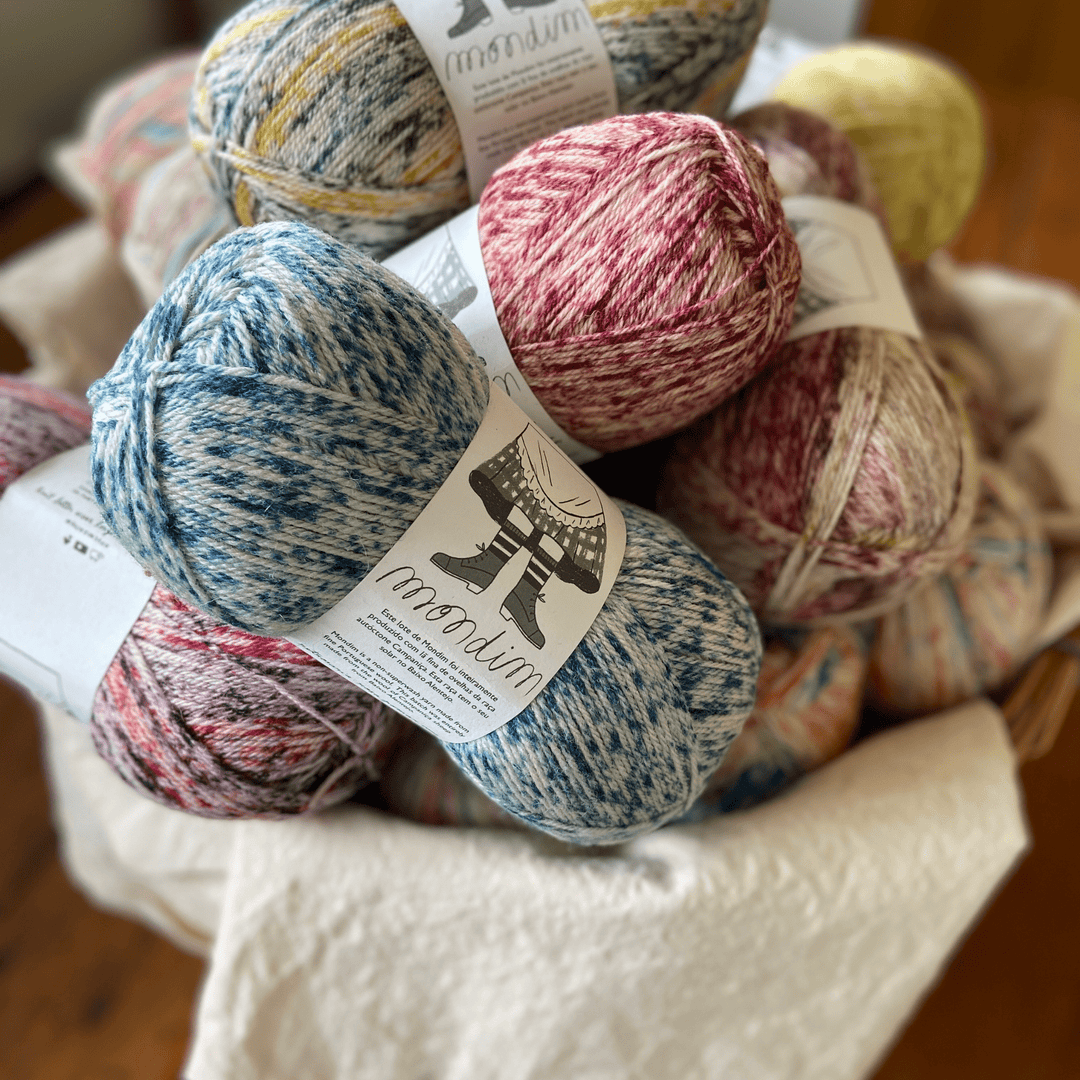
The Retrosaria yarn most knitters meet first, Mondim is a fingering-weight pure wool spun from Campaniça, a native breed of southern Portugal. It carries the name of a village in the north famous for sock-knitting, a small tribute to a tradition the yarn helps support. The wool itself is fine, soft, and built for everyday wear.
Shop Mondim (opens in new tab)

Vovó
Vovó means "grandmother" in Portuguese, and the yarn is named in honor of the women whose hand-knit cardigans clothed generations. A sport-weight yarn in Campaniça wool, made for daily-wear sweaters that hold up to washing, weather, and time.

Brusca
The breed-storytelling yarn of the Retrosaria range, Brusca is a DK blending Saloia (which Retrosaria has called the second rarest breed of native Portuguese sheep) with Portuguese Merino Branco and Merino Preto, the country's native white and black Merino strains. Retrosaria purchases the entire annual clip of Saloia wool through the breeders' association, which means that every Brusca skein is a small act of breed preservation.
Shop Brusca (opens in new tab)

Mungo
Retrosaria's sustainability story in skein form, Mungo is a worsted-weight 50/50 blend of recycled wool and recycled cotton, spun entirely from pre-consumer waste produced by Portuguese spinning mills. Wool and cotton fibers that would otherwise have been discarded are sorted, cleaned, and re-spun into a yarn with surprising body, gentle character, and the kind of melange tone that comes from many fleeces meeting in one skein. The wool is sourced in Portugal and Spain; the milling and dyeing happen in Portugal.

Pegulhal
Retrosaria's fingering-weight pure Portuguese wool, dyed in the fleece for the heathered, painterly depth that makes stranded knitting come alive. Current batches are spun from Campaniça and Black Merino, two of Portugal's most expressive native fibers. Pegulhal blooms and softens beautifully after washing, so a swatch is worth doing before you commit to gauge.
Shop Pegulhal (opens in new tab)
Rosa is also the author of Malhas Portuguesas, the definitive book on traditional Portuguese knitting. We'll spend more time with that book at our next stop.
Two Methods, One Mission

WoolDreamers and Retrosaria are kindred spirits with different temperaments. WoolDreamers brings the depth of a single family mill, four generations of accumulated knowledge, and a focus on bringing the best of Spanish wool to scale. Retrosaria brings the breadth of a country's villages, the patience of a researcher, and a commitment to breed-by-breed preservation that no one else in the trade is matching.
What they share is the work that matters most. Both pay shepherds fair prices for wool that had been treated as waste. Both have helped keep the mills they work with sustainable simply by giving them yarn to spin. Both, in a sense, are doing the slow, steady, walking work that keeps a landscape alive. And both are in the hands of knitters around the world, including, we hope, yours.

Browse Iberian Yarns (opens in new tab)
What's Next
At our fifth and final stop, we'll meet the knitters themselves: the Portuguese knitting method that has spread around the world, the traditional dress of Iberian shepherds, and the modern designers letting Iberian wool be itself.
We'll see you there.
6 comments
Back to The Woolly Thistle





Fascinating! I am so pleased to see the saving of historical breeds and yarn making!
Well written and presented. The photos add much to the information. So interesting and I have enjoyed the travels. Well done🙏
How exciting to see the restoring-endangered-breeds movement across Spain and Portugal! We had the opportunity to visit Mutur Beltz in the Basque Country of Northern Spain last year and learn about their work with the Carranzana sheep. We toured La Encartada Fabrika-Museoa in Balmaseda and learned about the txapela (beret) factory that operated for a century. We’re looking forward to a Portugal trip next year!
What a great way to learn about sheep breeds and their yarn. This armchair adventure tells an especially inspiring story for me. I am in awe of the commitment to saving rare breeds and creating such beautiful yarns. Thank you for bringing the experience to us!
OK, I know I can get a bit ‘soppy’ but these stories just about made me cry. What dedication and perseverance. I am a Spinner and work from raw fleece and will have to live to be 105 to get it all spun. I rarely if ever buy yarn but am so enamored with these products and I want a box with one of each…seriously! Esp A dark Pegulhal. Let me know if you do this. Thanks.
Leave a comment